
Writing Strategies for ELL Students: What Actually Works in Middle and High School
You ask your students to write a paragraph. You give them a topic, maybe even a photograph to look at first. You give them time. And then you collect the papers.
One student gives you three words. Another writes two sentences that trail off. One paper has their home language mixed in with a handful of English words. A few students wrote a lot, but when you read it closely, they repeated the same idea over and over because they didn’t have enough vocabulary to go anywhere else.
You look at that stack of papers and think: we have a long way to go.
If you’re new to teaching ELL students, or if ELL students suddenly showed up in your mainstream ELA class and their writing looks nothing like what you’re used to seeing, this post is for you. After almost 20 years of teaching ESL students, here is what I know about writing strategies for ELL students that actually move the needle.
What You’re Probably Thinking When You Read Those Papers
At this point you’re thinking a lot of things. They’re not trying. They do not care. They didn’t understand the assignment. They understood the text in class but somehow, they struggle when it comes to having to write it down.
And then comes the temptation. You want to reach for the red pen. You want to sit next to each student and walk through it line by line. You want to fix every mistake because you want to help, and you want to help right now.
That instinct comes from your good heart. But here is what almost 20 years of teaching taught me: you can’t red pen your way to fluency. And more importantly, they can’t write perfect English if they do not have it yet. That’s not a reflection of their effort. That’s just where they are in the process.
The Real Problem Is Not Writing
When an ELL student hands you a paper with fragments, spelling errors, missing punctuation, and grammar that reflects the patterns of their home language, it’s because they’re writing with the English they have. And the English they have is still being built.
Writing is the output. Language is the foundation. And you can’t skip straight to the output.
We often ask students to produce language before they’ve had enough time to acquire it. We say write a paragraph, but what they actually need first is vocabulary, sentence structure, and enough language exposure to have something to pull from when they sit down with that blank paper.
Build Language Before You Ask ELL Students to Write
You don’t teach writing first. You build language first.
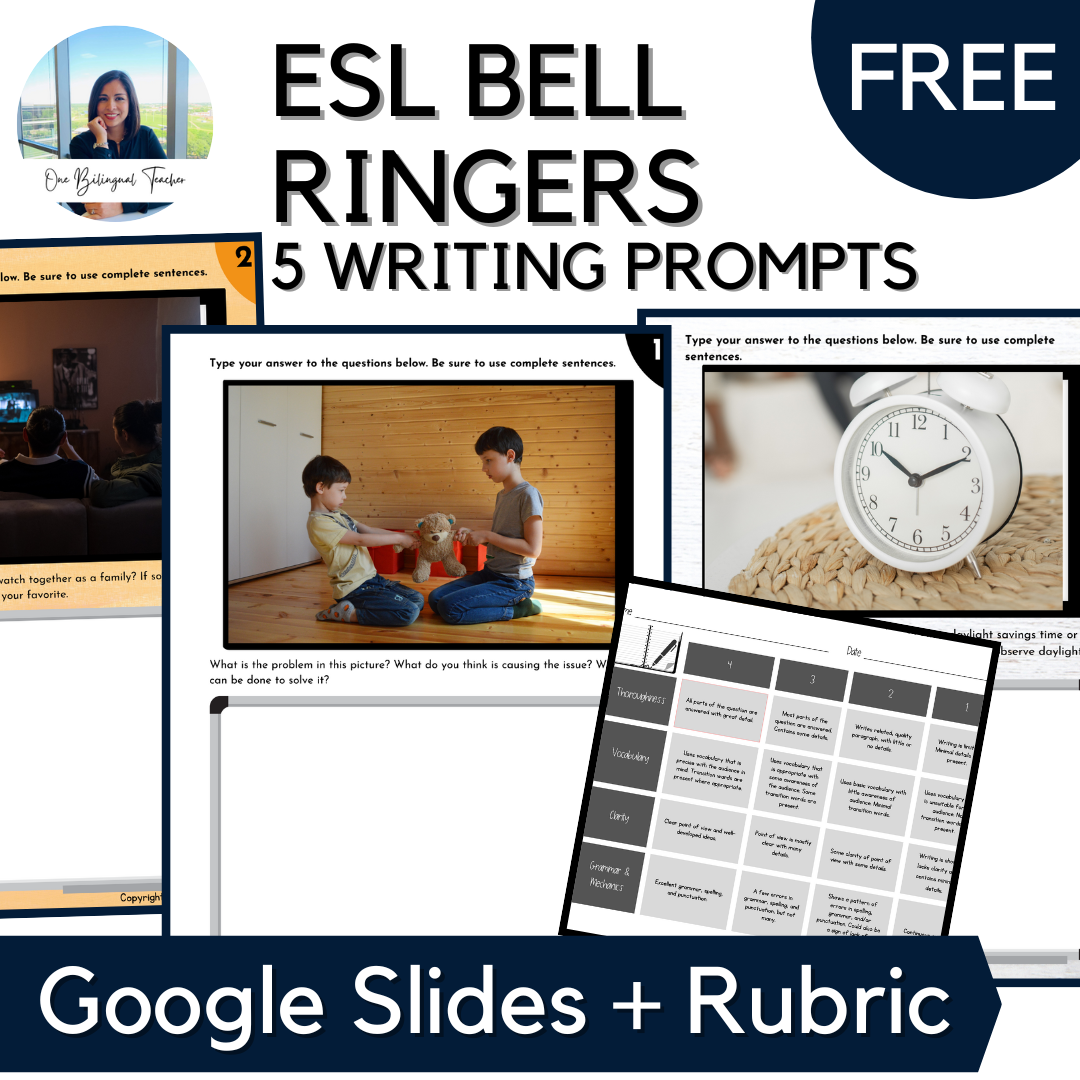
Before my students ever put pen to paper, we talk. I might show them a photograph and have them analyze it as a class. Then I put them in a think pair share so they can work through their ideas with a partner before they write anything independently. I pair my students strategically, too. Students with less English sit next to someone with a little more, so they’re picking up vocabulary from each other before the writing even begins.
By the time they write independently, they’ve already heard the words. They’ve already said some version of the ideas. They’re not staring at a blank page trying to pull language out of thin air.
I also prefer handwriting over the computer for this kind of practice. A computer introduces too many distractions. A piece of paper keeps them focused on the task.
✏ Want a ready-made way to do this? Grab my free Writing Picture Prompts. It includes photographs paired with writing support that are ready to use with your students tomorrow.
What Struggling Writing Actually Looks Like for ELL Students
Let me paint a picture so you know what you’re actually looking at when you read those papers.
Your beginners may mix their home language in with a handful of English words. That’s a sign that they’re trying to communicate with every tool they have, not disengagement. Your intermediates may write a full paragraph, but the grammar will reflect the patterns of their first language. That’s called language transfer, and it’s a completely normal part of the acquisition process.
Some students will write only a few sentences because they haven’t had enough writing practice yet. Others will write a lot, but you will notice repetition. They keep circling back to the same idea because they don’t have enough vocabulary to go anywhere else. And almost everyone will have spelling, capitalization, and punctuation issues. Lately, handwriting has become a growing challenge too.
None of this means your students can’t learn. It means they’re writers who are still building the language they write in.
Writing Strategies for ELL Students: Focus on Progress, Not Perfection
We’re never looking for perfection. We’re looking for progress.
Writing is one of those skills that none of us ever fully finishes learning. Native English speakers spend their whole lives becoming better writers. So the idea that our ELL students should be producing polished writing after a few months or even one school year is not realistic, and it’s not fair to them or to you.
Instead, focus on one thing at a time. Pick one writing skill to look for when you grade. Maybe this week it’s capitalization. Next unit it’s subject verb agreement. Maybe for now it’s just getting a complete sentence on the page. Grading everything at once overwhelms your students and makes it hard for them to know what to actually work on.
Many ESL teachers have the privilege of working with the same students for more than one year. If that’s you, you already know what I mean when I say the progress is real. You just have to zoom out far enough to see it.
The Most Important Writing Strategy: Write Every Day
If there’s one thing that moves the needle for ELL writers, it’s consistency. Students who write every day, even just a little, make more progress than students who write only when there’s a formal assignment.
It doesn’t have to be an essay. Journals, reflections, letters, responses, quick reactions to a photograph. Anything counts. The goal is to get them in the habit of putting pen to paper regularly so that writing starts to feel less like a task and more like something they just do.
A few writing activities for ESL students that have worked well in my classroom: I would sometimes pull up an anonymous writing sample, sometimes from a previous year, sometimes one I created myself with intentional errors, and we would read it together as a class and find the mistakes. Students love this. It takes the pressure off their own work and lets them see errors from the outside. And they have a blast reading them too!
I also had students read their own writing out loud. There’s something powerful about hearing yourself. They catch things on their own that they never would’ve caught on paper.
Your ELL Students Are Not Bad Writers
They’re writers who are still building the language they need to write in. That’s a very different thing.
Your job is to build language first, create daily practice, focus on one skill at a time, and trust the process. The progress is happening even when it’s hard to see.
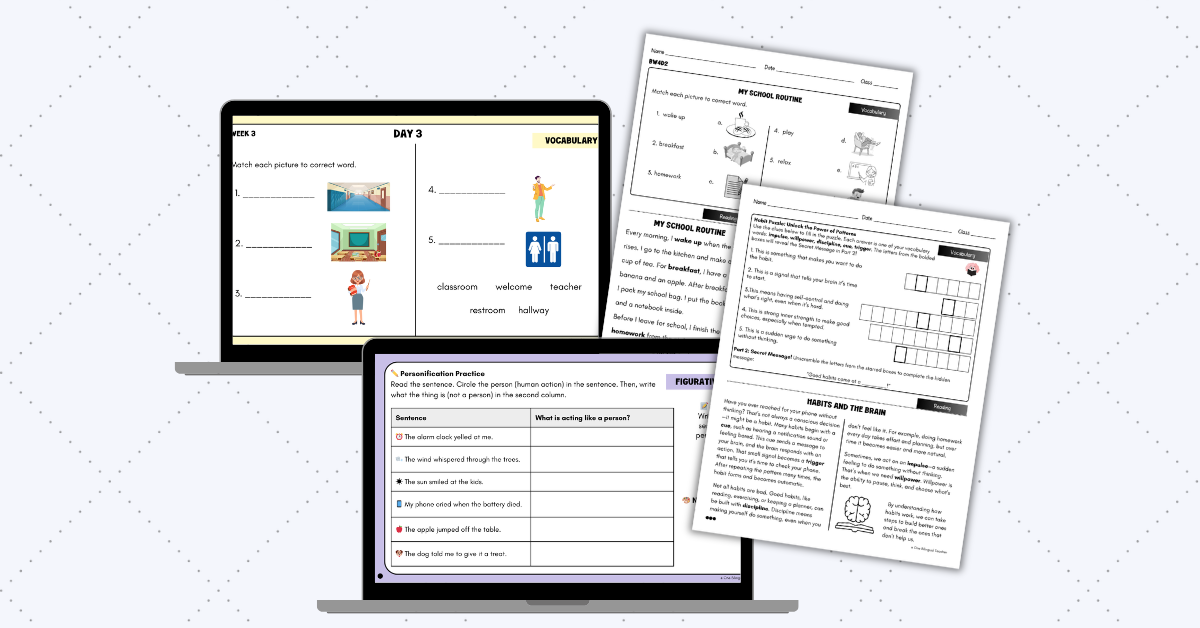
If you want this built out for you every single week, that is exactly what my ESL Teacher Membership does. Every week your students get a leveled writing prompt paired with a visual, differentiated by level, ready to go, and no prep on your end. Join the membership here and get access to daily writing practice your ELL students will actually be able to do.