
When a brand new student shows up to your secondary ESL class with little to no English, your brain goes into overdrive. My first thought is always, I hope they have a solid foundation in their native language. And many times, I am secretly hoping they speak Spanish so I can use mine to communicate with them. But if not, I’m just hoping they understand enough, maybe even some basic words or gestures to let me know what they need. Sometimes it’s as simple as pointing to pictures and having them point back so I can figure things out.
Sound familiar?
If you’ve been in this situation, you already know those first few days can feel like you’re building the plane while flying it. If you’ve ever searched for newcomer ELD activities that actually work in a secondary classroom, it usually comes from this exact moment. But after years of teaching secondary ELL students, I’ve learned this: it doesn’t have to be as complicated as we make it.
The Biggest Mistake Teachers Make with Newcomers
Teachers often freeze. They feel the pressure to do everything right, and in that moment, it’s easy to forget that the student in front of them is still just a teenager like everyone else in the room.
English learners sometimes get treated as if they need something completely different, or something we’re not equipped to give. But the reality is, they have the same basic needs as every other student. They just don’t have the language yet to express those needs. They may not understand English, but they understand what it means to be a student, to feel nervous, to want to belong.
It’s also important to remember that we don’t always know their background. Some students may have experienced trauma. Some may be adjusting to a completely new country or school system. They walk into our classrooms carrying experiences we may never fully understand.
And still, the instinct is often to jump straight into academics such as teaching skills like satire or figurative language right away. But what many newcomers need first is much more basic: restroom, teacher, friend, desk, pencil.
Start there. Focus on survival language first. Academic instruction can wait a few days.
What Newcomers Actually Need in Week One
Before you plan any academic lesson, take a step back and think about what your newcomer actually needs to feel safe and oriented in your classroom. Here are a few things I always prioritize first:
Tours and pointing
Walk them around the school and show them key places like the cafeteria, restroom, and front office. These spaces might be completely unfamiliar, and even something like the cafeteria can feel overwhelming. Use pointing, labeling, and repetition to help them start building the background knowledge their classmates already have.
Procedures and schedules
Explain how the school day works, what a schedule looks like, when students move classes, and what to expect throughout the day. It may seem basic, but it’s not basic for someone who has never experienced this type of school system.
A buddy
If possible, pair them with another student who speaks their language, at least for the first week. This isn’t a crutch. It’s a bridge. It gives the newcomer a sense of comfort and helps them feel like they’re in a safe, supportive environment.
Get-to-know-you activities
Focus on simple activities that help build connection. This isn’t just about you getting to know the student. It’s also about helping them connect with their classmates. They need to feel like they belong before they’re ready to learn.
Pointing and labeling activities
These are especially helpful in the first week. There’s no pressure for students to produce language yet. The goal is exposure using visuals, gestures, and low-stakes interaction to build understanding.
The goal of week one is never academic instruction. It’s about comfort, connection, and building survival vocabulary. That’s where everything else starts.
5 Newcomer ESL Activities That Actually Work for Secondary Students
Once your newcomer has had a few days to get their bearings, you can start introducing simple, structured newcomer ESL activities that build language without overwhelming them. These also work well as beginner ELL activities, so you can use them with true newcomers and higher beginners in the same classroom, no separate lesson plans required.
1. Survival Vocabulary Lessons
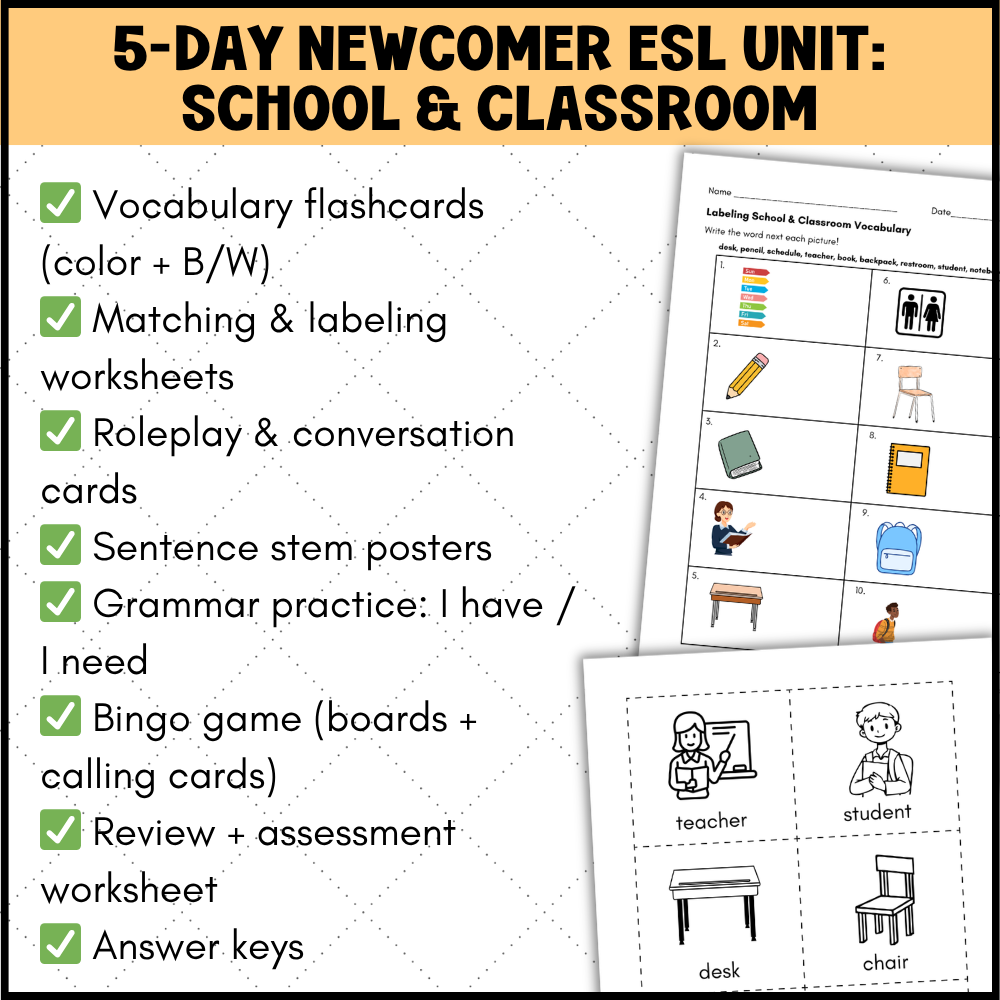
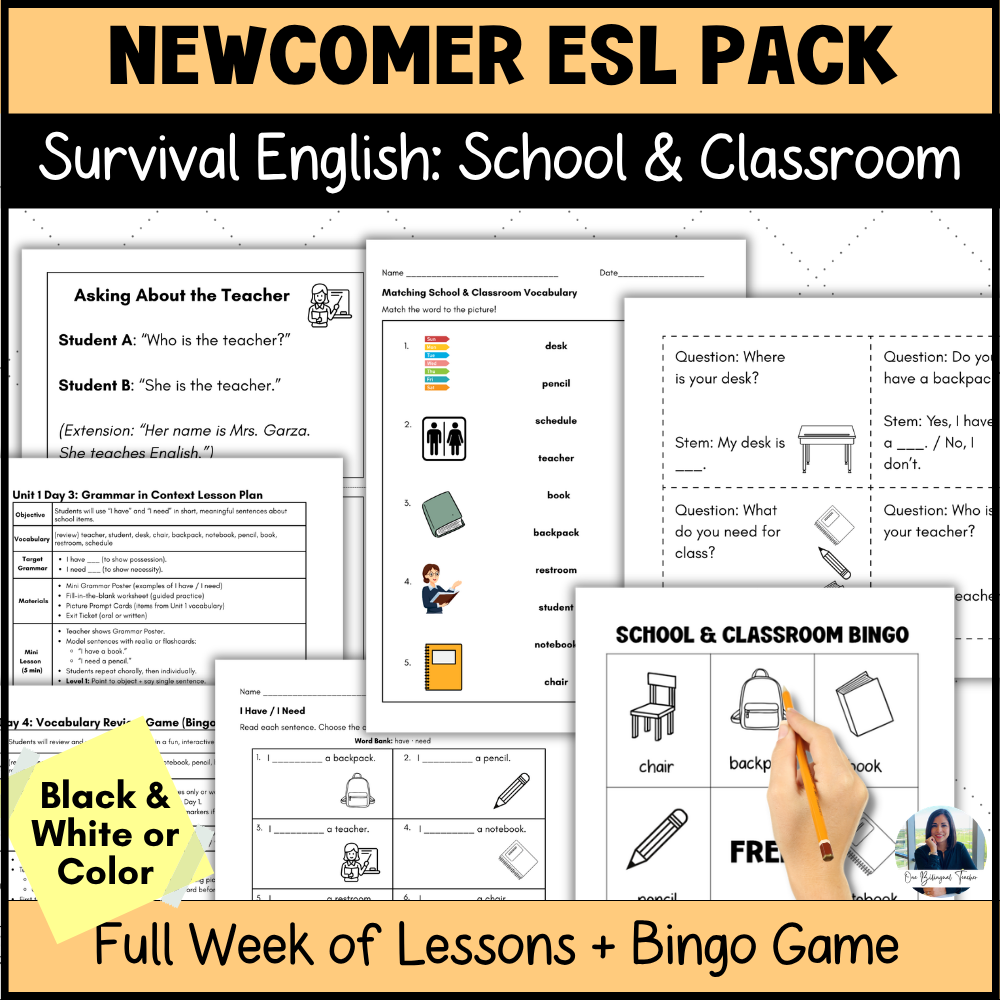
School and classroom vocabulary is the best place to start. Your newcomer needs to know the words for the things they interact with every day such as desk, pencil, restroom, schedule, teacher. A structured survival vocabulary unit gives them the language they need to navigate their day with more confidence. My Newcomer ESL School and Classroom Survival Vocabulary Lesson Pack was designed specifically for middle and high school students with no babyish materials, just age-appropriate visuals, flashcards, conversation cards, and a Bingo review game that even reluctant students will enjoy. It’s five days of lessons, ready to go.
2. All About Me Activities
Getting-to-know-you activities are more than just icebreakers. They’re meaningful language practice. When students talk or write about themselves, they’re using vocabulary that is personal and relevant, which makes it easier to remember. A simple All About Me digital activity gives them structure without putting them on the spot. My ESL Back to School All About Me Digital Activity works for both newcomers and intermediate students, so you’re not creating multiple versions of the same assignment.
3. First Week Speaking Activities
Speaking in a new language can feel intimidating, especially in front of a new group of peers. Start with low-pressure, structured speaking tasks that give students clear expectations and support. My First Week of School Speaking Activities for ESL Beginners is designed for this exact stage: when students are just beginning to feel comfortable and need a simple way to start speaking English.
4. Would You Rather Speaking Warmups
Once students have had a few days to settle in, “Would You Rather” questions are an easy way to build participation. Students can engage by simply choosing an option, and as they gain confidence, they can begin to explain their thinking. My Winter ESL Speaking Warmup with Would You Rather Questions is designed for newcomers and works well as a quick daily routine for the whole class.
5. Seasonal and Holiday Activities
Seasonal activities are some of the most effective ELD activities for newcomers because they connect language to real-life experiences. Topics like Back to School, Thanksgiving, Winter Break, and holidays around the world help students build both vocabulary and cultural understanding at the same time.
A Pep Talk for the Overwhelmed Teacher
If a newcomer just walked into your classroom and you are reading this in a panic, here is what I want you to know.
Teach to the rest of your class like you normally would. Give the newcomer a buddy and seat them together. Don’t isolate them during class discussions and do not single them out. Just let them get acclimated to the environment that first week.
I know it feels like you need to do something special for them every minute. But when you start pointing them out constantly or asking them a ton of questions in front of everyone, they retract. They pull into a shell instead of opening up. What they need is to feel like part of the class first. Then, once they’re more comfortable, you can pull them into a smaller group or work with them one on one for academic instruction.
Be aware of their body language. Watch for signs that they need something basic such as the restroom, water, a moment to breathe. And please, don’t expect them to complete on-grade-level assignments. Give them alternative assignments, talk to your admin about grading, and keep your focus where it belongs in those first weeks: survival language.
They understand life. They just need you to meet them where they are.
Ready to Make It Easier?
Browse my Newcomers and Beginners resources in my store where everything is age-appropriate for middle and high school, ready to use, and designed for real secondary ELD classrooms.