
How to Survive (and Thrive) as a First-Year Secondary ESL Teacher

I started my first ESL teaching job a couple of weeks after school had already begun.
By the time my paperwork was in order, the year was already rolling. I walked into a shared library space with two other classes going on at the same time, students coming in and out for Chromebook issues and library books, and no curriculum anywhere. I had fifteen years of elementary Spanish bilingual teaching behind me, so I thought I knew what I was doing. I figured I'd hop on Teachers Pay Teachers, grab some resources, and be fine.
Except there was almost nothing on TPT for secondary ESL. Everything was for elementary. And I was suddenly in a classroom with students from all over the world, many of whom spoke neither English nor Spanish, and I had no way to communicate with them.
That was my first year. If you're heading into yours, keep reading.
The Thing Nobody Tells You Before You Start
You’re probably going to be the only ESL teacher in your building. Maybe in your entire district. Admin is going to be busy, and ESL is not always going to feel like a priority to the people making decisions around you.
That means you may end up doing more than just teaching. You may find yourself advocating for students who should be on your roster but aren't, and pushing back on scheduling decisions that don't make sense for your population.
In my first year I had students in my class who didn't really need to be there, and students in the building who did need me but weren't placed with me. Admin didn't always know how to group ESL students correctly, and I had to figure out how to advocate for them even though that wasn't technically my job. Nobody told me that was coming.
Now I'm telling you.
Your Job Is to Teach Language, Not Content
This is the biggest mistake I see first-year secondary ESL teachers make, and it makes the job so much harder than it needs to be.
A lot of teachers come in thinking they need to follow the English class curriculum, or run parallel with what the English teachers are doing so students get exposure to the same vocabulary. The intention is good. But it misses the point of why your students are with you.
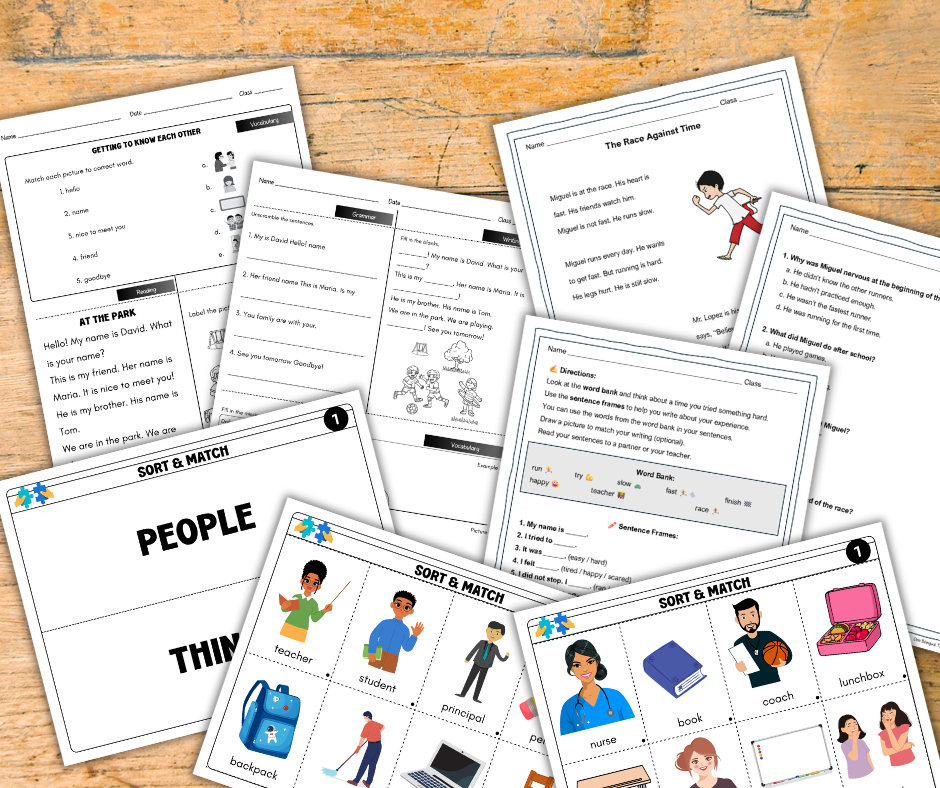
Your students are not in your class because they need academic content support. They are in your class because they need language. Your job is to teach the four domains: reading, writing, listening, and speaking. Teach them the meaning of words. Teach them how to communicate. You can absolutely incorporate content into that work, but content is not the destination. Language is.
When you remember that your whole role is language development and not teaching Shakespeare, the job gets a lot simpler. You stop trying to cover everything and start focusing on what actually moves your students forward.
Go Slow to Go Fast
My son runs cross country and track, and his coach always says: run slow to run fast. You build more endurance by slowing down than by sprinting and burning out.
Teaching ESL works the same way.
Expected growth for an English language learner is one year of language per year of instruction. If you get a student from a level two to a level three, that is a win. Your job is not to take them from level one to level five in a single school year. It takes five to seven years to learn a language. Slow, consistent progress beats trying to cover everything and leaving students behind every time.
Surviving your first year means connecting with your students and establishing routines to teach language. That's it. You don’t need a perfect curriculum. You don’t need to cover every standard. You need your students to feel seen, to feel safe, and to make one year of growth.
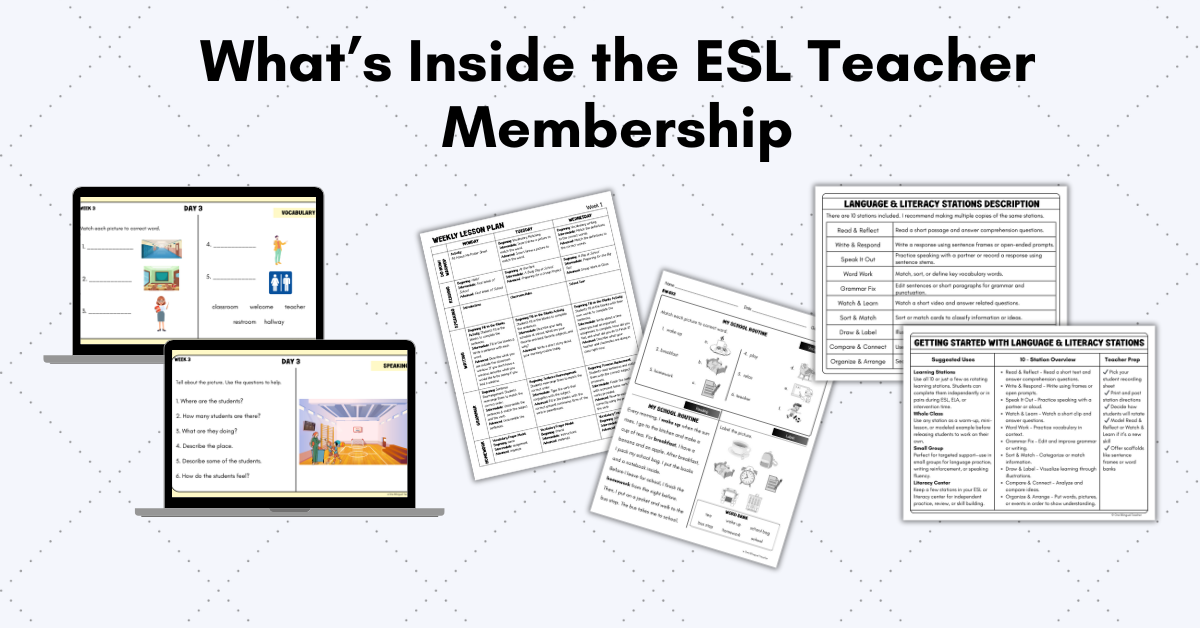
The teachers who thrive instead of just survive are the ones who plan in units instead of day by day, build routines that run on autopilot, and stop trying to do everything at once. Projects are great for this because one project covers multiple skills over one to two weeks and keeps planning manageable. The ESL Teacher Membership is already set up in units that connect to each other so you always know what's coming and you're not searching for what to do next.
Newcomer Students Are Humans First
Working with newcomer students in your first year, when you're already overwhelmed, can feel like too much. Here's what I want you to hold onto.
They are humans first and students second.
Your newcomer students have struggled to get to your classroom. They are navigating a new country, a new school, a new language, and a new culture all at once. Before you can teach them anything academic, they need to feel safe and connected. Their first year in your class is really an acclimation year. Cultural comfort comes before content.
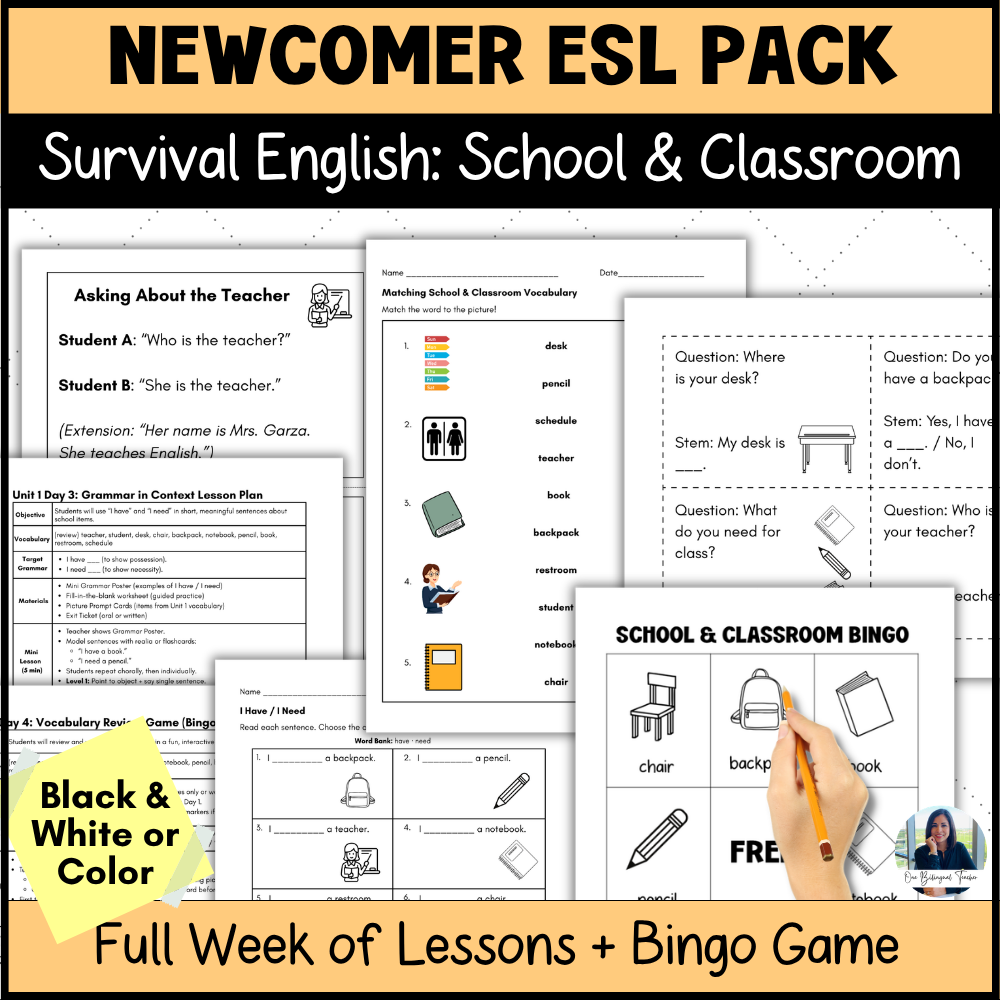
Focus on survival language first. Teach them how to be in your classroom, in your school, in this country. I have a Newcomer Survival Pack with the essential vocabulary newcomers need to get through their day, and it's a good place to start when you're not sure where to begin.
Language is not just words. Language is also culture. You’re not just a language teacher. You’re the go-to person for every cultural question your newcomers have, and that relationship is the foundation everything else gets built on. When a student feels connected to you, that's when they want to learn.
Find Your People Before You Burn Out
Being a secondary ESL teacher is lonely. You’re probably the only one in your building, and that isolation is real. The fix is community.
Join Facebook groups for secondary ESL teachers. Look for people in your district who work with ELL students. Talk to other teachers who are doing what you're doing, share ideas, and let yourself be helped.
Come join us in the Secondary ESL Teacher Community on Facebook. It's full of teachers at every stage who are generous with their ideas, their resources, and their time. You don’t have to figure this out alone.
What I'd Tell Myself on Day One
Be ready for anything. And everything.
You don’t know how much support you're going to have. You don’t know what your classroom situation will look like or whether your roster will make sense. What you can control is showing up, connecting with your students, and remembering why they are there.
They’re there to learn language and culture. They’re not a number on your roster. They’re kids doing something incredibly hard, and you get to be the person who makes it feel a little safer.
It's okay to buy resources. It's okay to ask admin to fund them. It's okay to not have everything figured out. Just show up. That matters more than you think.
Looking for a curriculum that's already planned, already differentiated, and ready to go from day one? The ESL Teacher Membership was built for secondary ESL teachers who are tired of starting from scratch.