
ESL Writing Activities That Actually Work for Secondary Students
When a teacher says "my students won't write," what they usually mean is one of two things: either writing does not happen consistently enough to become a routine, or students do not have the language and supports they need to get started.
That's it. Those are the two reasons.
If you expect your students to write every single day, they will eventually write for you. It becomes the norm. They walk in, they see the prompt, they write. No negotiating, no convincing, no "but I don't know what to say." They just write because that's what they do in your class.
But if writing only shows up occasionally, students treat it like an event. Something uncomfortable and unfamiliar. The resistance you're seeing is not attitude. It's anxiety about not knowing what to do or not having the language to do it.
Here's how to fix both problems.
Start With Bell Ringers and Build the Routine First
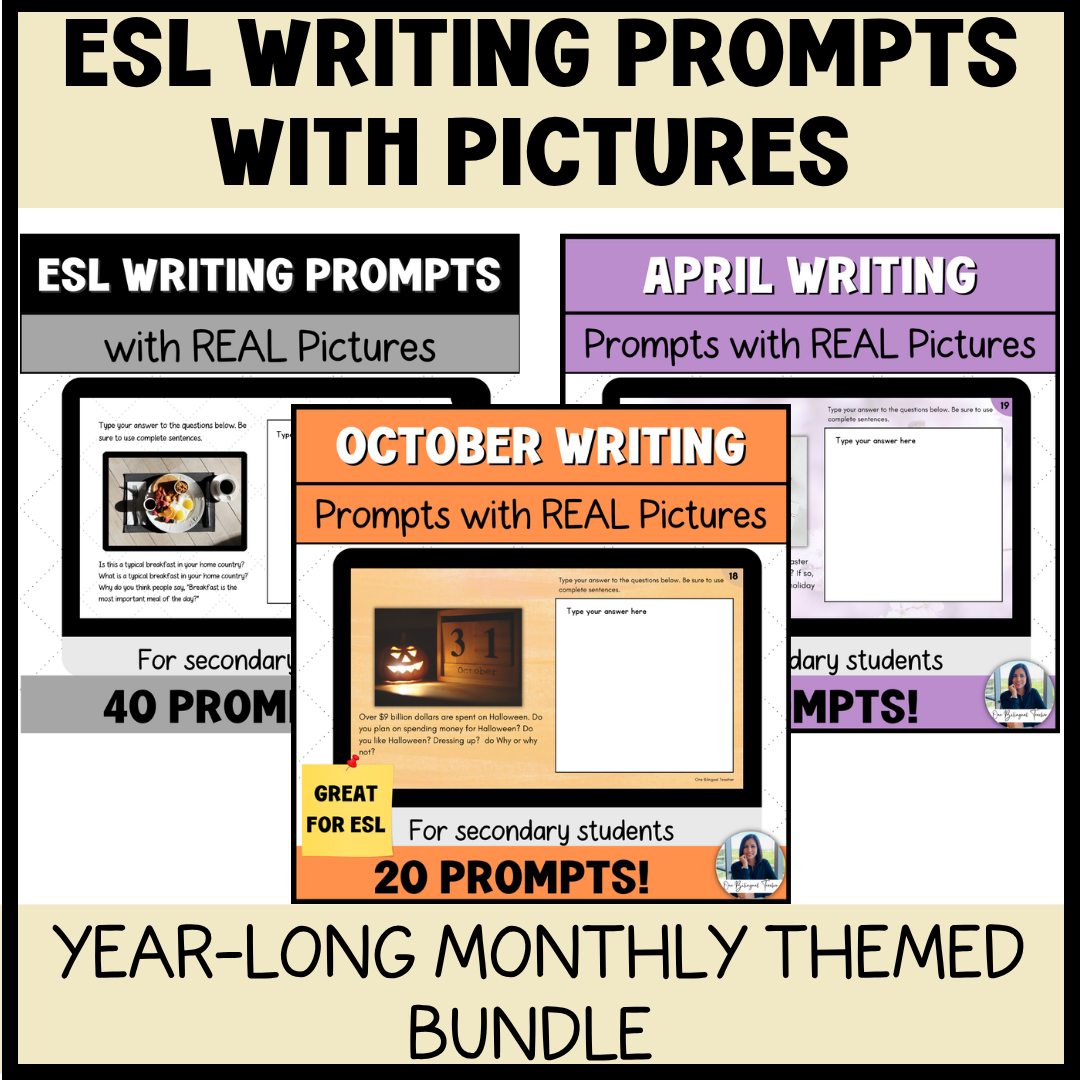
The single most effective writing activity for secondary ESL students is also the simplest: a picture prompt bell ringer.
Put a picture on the screen. Add a prompt. Students write about it. That's it.
A picture is worth a thousand words, and for ESL students that is literally true. When students can see something, they have something to say about it. The visual removes the "I don't know what to write about" barrier entirely and gives students a concrete starting point regardless of their proficiency level.
The reason bell ringers work so well is the routine. From day one, students know that when they walk in they look at the picture and they write. Every day. No exceptions. By the third or fourth week it's automatic, and that automaticity is what builds writing fluency over time.
When students say they're done, teach them to keep going by asking themselves: and then what happened? What else? What else? Train them to push themselves past the first draft instinct to stop. That internal push is how you develop stamina.
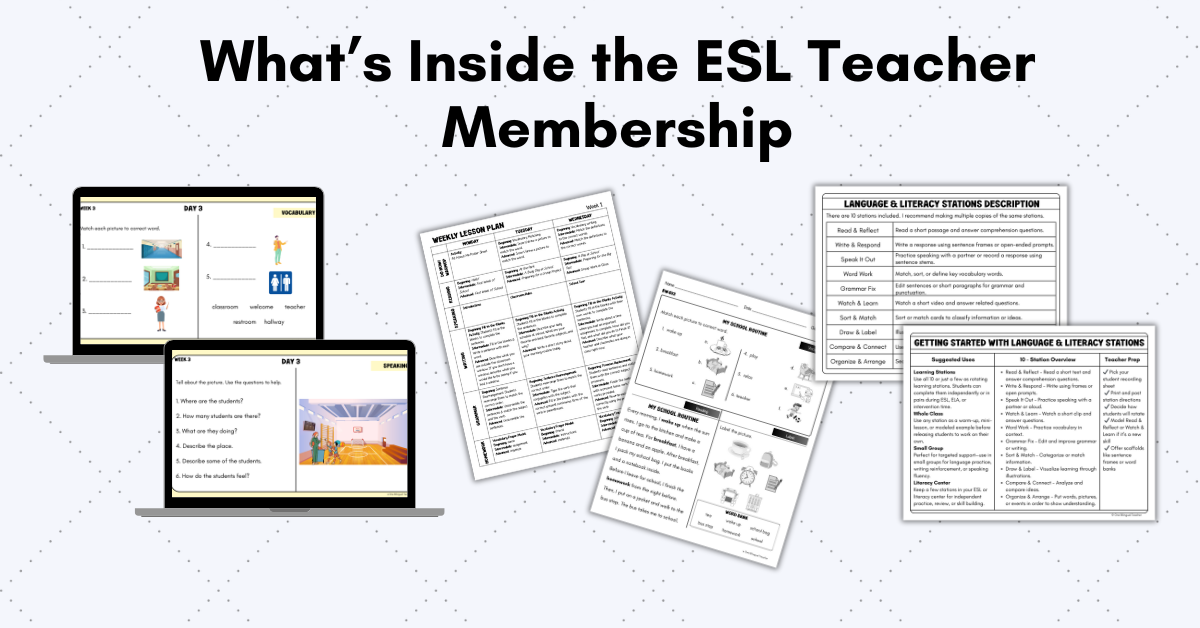
My writing bell ringers include both picture prompts and leveled prompts so you can differentiate from day one. They're also many available inside The ESL Teacher Membership alongside the rest of the writing curriculum.
Give Students Something to Write About That They Already Know
Here's something every writing teacher eventually figures out: you cannot write about things you have not experienced or at least read about. You have nothing to say.
Every author draws from their own experiences. Your ESL students are no different.
One of my favorite writing projects is called the All About My Country project. Students research and write about their own home country, conduct an interview with a family member who grew up there, and create a slideshow with pictures and captions alongside a full research paper. It sounds ambitious but it works at every proficiency level because the topic is personal.
What happened when I ran this project surprised me. Students worked harder than they had all year. They were invested in the writing because it was about them, about their family, about something they knew and cared about. Beginners wrote shorter pieces but they wrote them with confidence. Advanced students went deep. Everyone presented their project in front of the class and read their essay out loud, including the students who would normally do anything to avoid speaking in front of others.
When the topic matters to the writer, writing stops being a chore. That is the whole point.

How to Differentiate Writing Activities Without Watering Anything Down
The most common mistake ESL teachers make with writing is expecting students to produce long, polished essays before they have the language to do it. That expectation shuts students down before they even start.
Here's the reframe: differentiation in writing does not mean giving some students easier topics or less rigorous assignments. It means meeting students where they are in terms of language supports.
A beginner can write a five paragraph essay. Each paragraph might only be two or three sentences, and those sentences might be simple. That is still a five paragraph essay. The structure is the same. The language load is just adjusted.
For students who need more support, use sentence frames and paragraph frames. Give them the scaffolding so they can fill in their own ideas. Students feel genuinely proud of writing they produced themselves, even when the frames helped them get there. The goal is always to gradually release the scaffold as their language develops.
For students with more language, remove the frames and give them a word bank or a vocabulary list. Then remove that too. The assignment is the same. The support level is what changes.
Here is what that looks like across proficiency levels for a simple descriptive paragraph:
Beginner: Sentence frames with vocabulary support. "My country is called ___. It is located in ___. One thing I love about my country is ___."
Intermediate: Guided paragraph structure with a topic sentence starter and supporting detail prompts. Frames available but optional.
Advanced: Open prompt with a mentor text for reference. Students write independently using their own sentence structures.
Same assignment. Three entry points. Nobody is doing busy work and nobody is lost.
Writing Is a Tool, Not the Destination
Whether you're brand new or twenty years in, keep reading.
When you focus on making students write correctly, they freeze. The pressure of getting it right shuts down the part of their brain that has something to say.
But when writing becomes a tool for students to express themselves, they stop thinking about the sentences and start thinking about the idea.. They start asking you how to spell things, how to say things, how to get their point across. The writing becomes a means to an end rather than the end itself.
Your job is to give them something worth saying, the vocabulary to say it, and the routine that makes saying it feel normal. When all three of those things are in place, students write. Every time.
Where to Start If You Have No Writing Curriculum
Start with bell ringers. Do them every single day. Build the routine before you try to build anything else.
Once the routine is solid, add a project. Something personal, something the students already know about, something they can research and own. The All About My Country project is a good one to start with, but any topic that connects to your students' lives and experiences will work.
From there, add genre-specific writing activities as you go. Paragraph writing, descriptive writing, narrative writing, research writing. You do not need to have it all figured out before you start. You just need day one to be a bell ringer and a picture on the screen.
The writing curriculum will build itself from there.
Want writing activities that are already differentiated and ready to use? The ESL Teacher Membership includes leveled writing bell ringers, paragraph writing activities for every genre, and projects such as the All About My Country project. All designed for secondary ESL students.