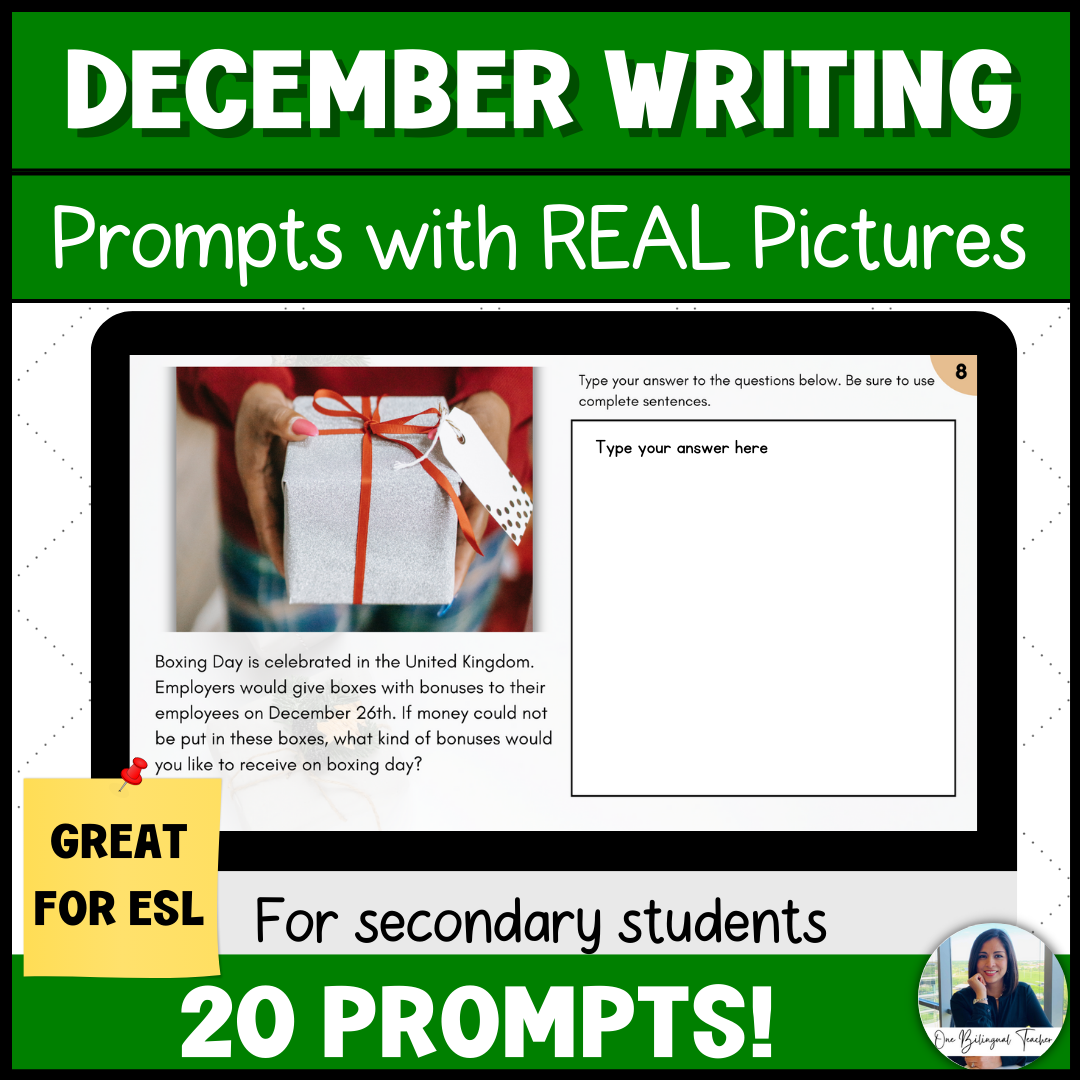

December in the ESL classroom can feel like a whirlwind. Between assemblies, early-release days, testing, and students (and teachers!) counting down to winter break, planning full lessons can be a lot. The good news? You don’t need to completely reinvent your plans to keep students engaged this month.
In this post, I’m sharing five low-prep December activities that work beautifully in secondary ESL classrooms. They support all four language domains, require very little prep, and can be reused throughout the month with just a few small tweaks.
Whether you’re teaching newcomers, intermediate learners, or advanced ELLs, these simple routines will help keep learning meaningful even when the schedule feels anything but predictable.
1. Picture of the Day: Winter Edition
What it is:
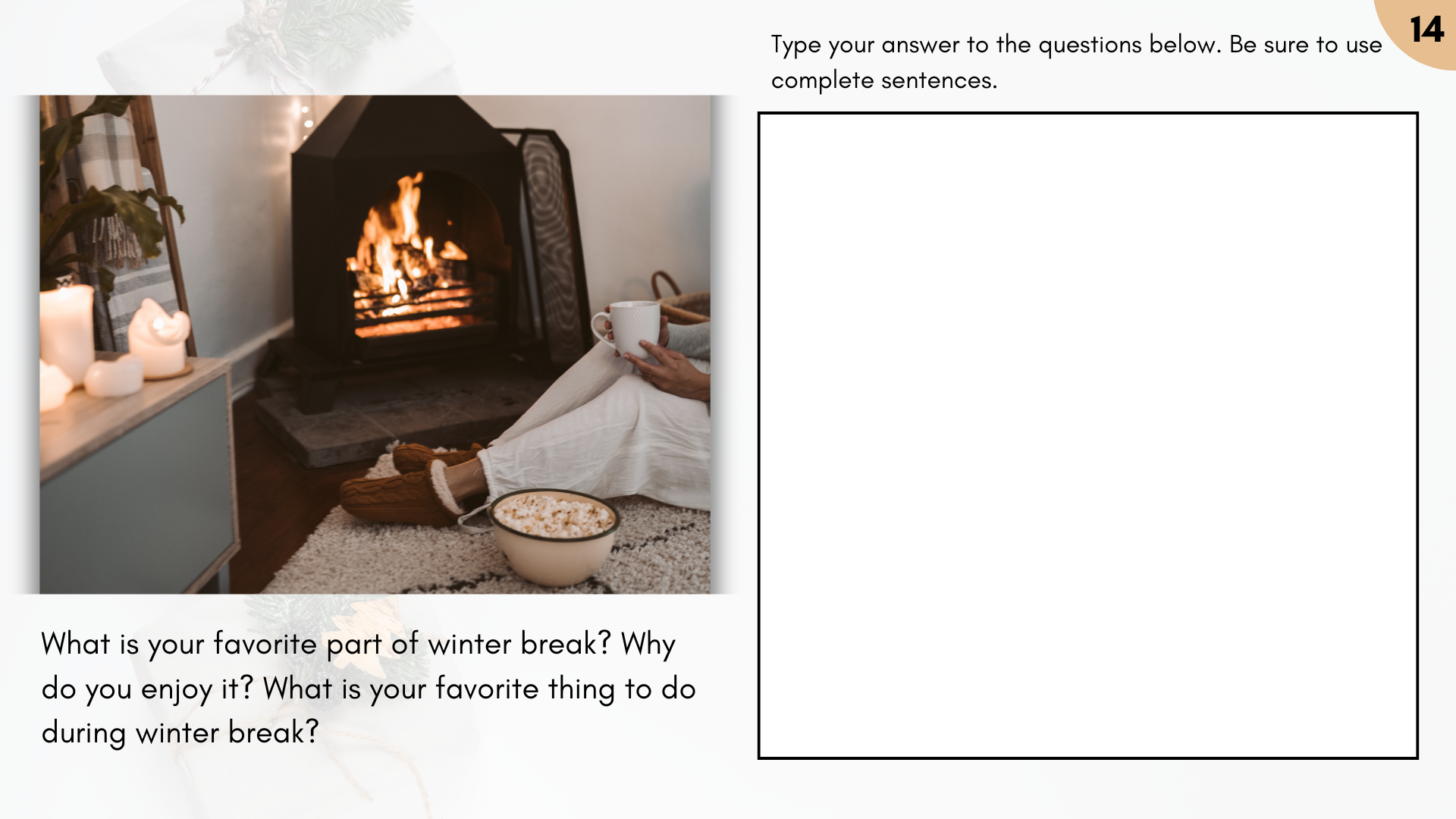
A simple routine where you show a December- or winter-themed photo and have students respond to it through speaking or writing. Think snowy streets, steaming mugs, cozy winter scenes, holiday markets, winter animals, or classroom celebrations.
How to use it:
For Beginners:
Provide sentence stems:
I see…
I feel…
The weather is…
Let them label items in the picture (snow, tree, hat, lights).
For Intermediate Students:
Ask them to write 3–5 descriptive sentences using sensory language.
Have them share their descriptions with a partner.
For Advanced Students:
Turn it into a mini narrative:
“Write a short story about what’s happening in this picture.”
“What happened 5 minutes before or after this moment?”
Why it works:
It’s predictable, engaging, and takes zero prep beyond choosing an image. Students also get repeated practice with vocabulary, sentence structure, and descriptive language.
2. “Would You Rather…?” Winter Edition
“Would you rather?” questions are fun, low-risk, and perfect for building speaking and writing fluency. In December, a holiday or winter twist makes them even more engaging.
Examples:
Would you rather spend winter in a snowy city or on a warm beach? Why?
Would you rather drink hot chocolate every day or eat cookies every day?
Would you rather have a long winter break or shorter breaks throughout the year?
Classroom ideas:
Whole-Class Movement:
Read the question aloud, then have students move to one side of the room for option A and the other side for option B. They can share their reasoning with a partner on their side.
Writing Extension:
Students write a short paragraph explaining their choice using transitions:
First… Next… Also… For example…
Why it works:
Students LOVE sharing opinions, and even quieter learners feel comfortable participating when the structure is clear and the topics are fun.
3. December Quick-Write Journals
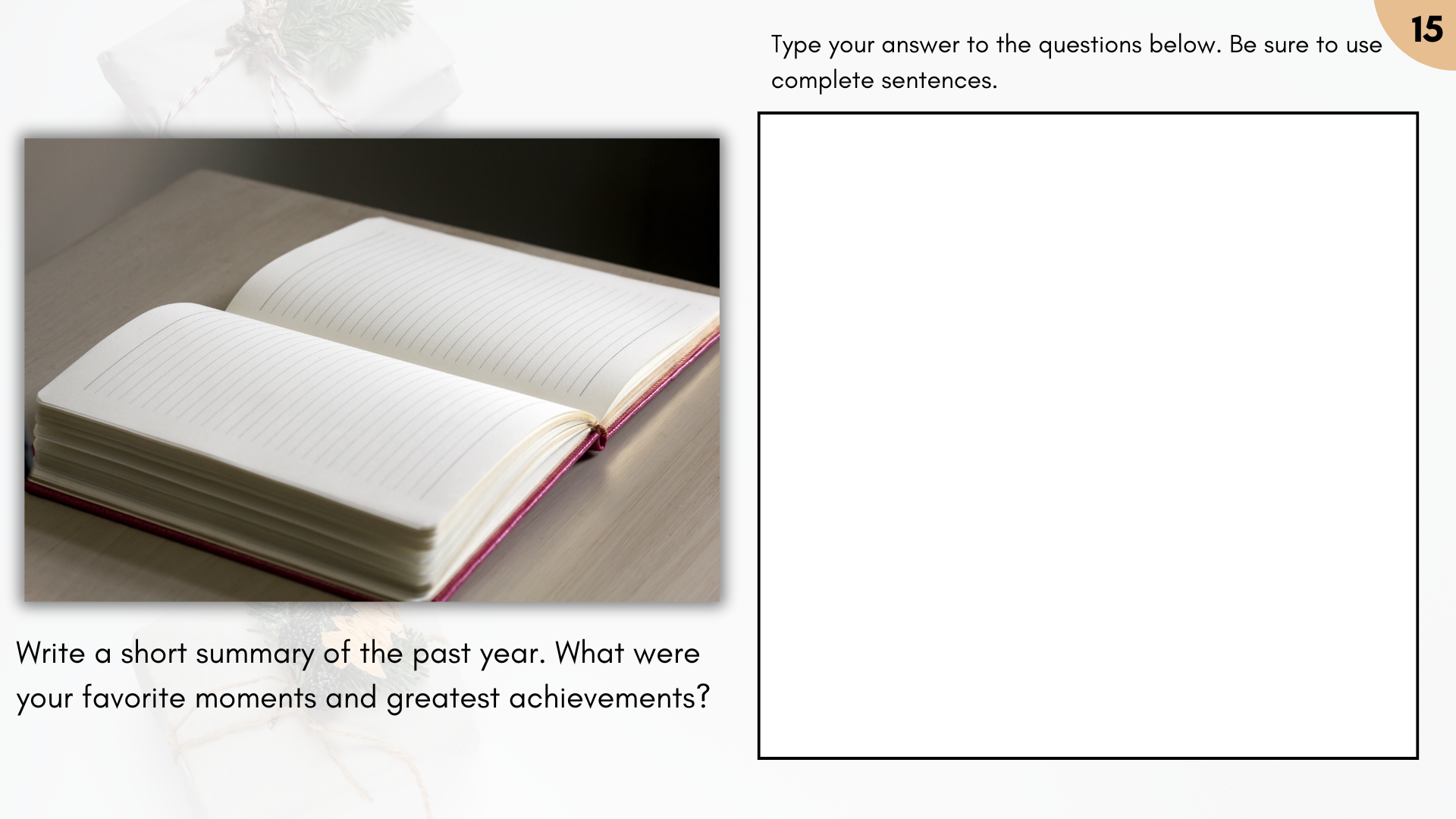
Journaling is a powerful tool for building writing fluency, and December is the perfect month to use it. Students are dealing with a lot. End-of-year stress, excitement, changes in routines and writing can help them process while still practicing English.
Prompt ideas:
Three things I’m looking forward to this month are…
One thing that stresses me out in December is…
My perfect winter afternoon would be…
One goal I have for next semester is…
Differentiation Tips:
Beginners:
Provide sentence starters (This month I feel… I want to…).
Allow drawing + labeling before writing.
Intermediate / Advanced:
Encourage full paragraphs with topic sentences and details.
Have them underline transition words or descriptive vocabulary.
Why it works:
It’s flexible, quick, and meaningful. Journals also give you insight into how your students are feeling during a sometimes overwhelming month.
4. Holiday & Winter Traditions Partner Interview
December is a great time to explore cultural traditions without assuming everyone celebrates the same holidays. This activity lets students practice real conversation skills and learn more about each other.
How it works:
Pair students up.
Give them a question bank, such as:
Do you celebrate any holidays in December?
What traditions or foods are important to you?
What do you usually do during winter break?
What do you like or dislike about winter?
Partner A interviews Partner B; then they switch.
Each writes a short paragraph or presentation about their partner’s traditions or winter experiences.
Differentiation:
Provide visuals and sentence frames for newcomers.
Ask advanced students to compare/contrast their partner’s traditions with their own.
Why it works:
Students love talking about their lives, and this activity builds speaking, listening, and writing skills all at once with no prep required.
5. Short Video + Response (Listening + Writing)
Short, focused videos are great for December because they grab attention and create natural opportunities for listening comprehension and writing.
Steps:
Choose a video about a winter topic (snowflakes, winter animals, cultural celebrations, traditions, etc.).
Pre-teach 3–5 vocabulary words.
Watch once all the way through.
Watch again and pause for notes.
Have students complete a task:
For Beginners:
Match vocabulary to images
Complete sentence frames (In the video, I learned…)
For Intermediate Students:
Answer comprehension questions in complete sentences
For Advanced Students:
Write a summary or opinion paragraph
Include transitions and specific examples
Why it works:
It blends listening practice with writing and gives students something fresh and engaging during an otherwise chaotic time of year.
Final Thoughts
December doesn’t have to be stressful in the ESL classroom. With simple routines like picture prompts, winter “would you rather” questions, journaling, partner interviews, and short video activities, you can keep learning meaningful without adding more to your plate.
You don’t need to do all five pick one or two that feel doable this week, reuse them in different ways, and give yourself permission to keep things simple. Your students will still grow, learn, and stay engaged.
If this was helpful and you'd like even more December-friendly, ready-to-use activities, make sure to check out my Christmas, winter, and ESL bundles in the shop. They’re perfect for saving time during the busiest month of the school year.